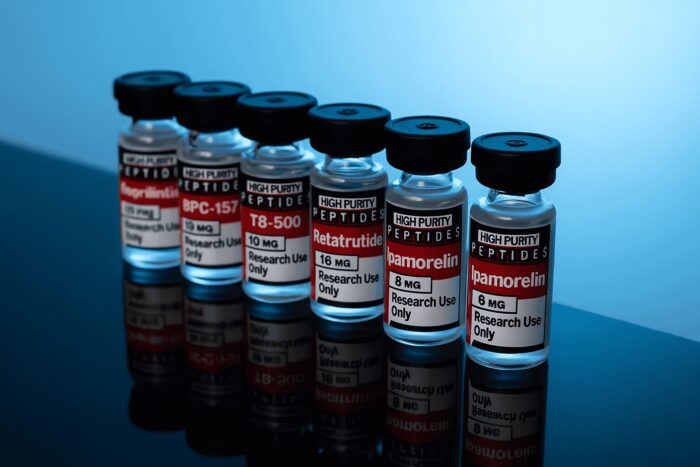
Peptide Purity Testing: Just How Researchers Validate Top Quality
What Is Peptide Pureness And Why Does It Matter In Research-grade Peptides? Qing Li Peptide MALDI-TOF (Matrix-Assisted Laser Desorption/Ionization Time-of-Flight) is quicker and simpler. It creates mainly single-charge ions, making spectra less complicated to analyze. MALDI-TOF is often liked for regular identification verification as a result of its speed and tolerance for sample impurities. Palmetto Peptides supplies third-party COA documents for its research study peptide catalog, with screening carried out by approved exterior logical laboratories. See our write-up on comprehending COAs for research study peptides for examples making use of actual COA structures. A COA that does not include endotoxin testing results is incomplete for any type of study application including biological systems.
- HPLC steps separation and loved one peak location; mass spectrometry procedures mass-to-charge actions that can be made use of to validate molecular identity.
- It straight impacts the reliability and reproducibility of speculative results.
- Chameleon Peptides markets study substances specifically for lab and analytical objectives.
- MALDI-TOF is typically favored for regular identification verification as a result of its rate and tolerance for sample impurities.
- When methods that should function don't create expected results, product quality becomes a suspect variable.
- 98% purity by RP-HPLC is the standard criteria for research-grade peptides and represents a durable level of purity for a lot of preclinical research study applications.
Supplier Certification Process
Many peptide pureness analyses utilize reversed-phase HPLC (RP-HPLC). In this setup, the fixed phase is hydrophobic (water-repelling), typically C18-bonded silica. The mobile phase is a slope of water and an organic solvent like acetonitrile, usually with a small amount of trifluoroacetic acid (TFA) to sharpen the heights. Specifically modified peptides or cyclic peptide series are challenging to validate, which influences quality assurance. Consistent shot quantity matters due to the fact that overwhelming the column can broaden optimals, distort pureness estimates, or conceal neighboring pollutants. For researchers devoted to quality-verified peptide research study, SeekPeptides supplies detailed support on methods, dosing, and supplier analysis. The combination of evidence-based educational sources and sensible tools helps researchers make notified decisions throughout their peptide trip, from initial supplier choice through protocol optimization. Comprehending how much time peptides require to work aids set reasonable assumptions, but confirmed product high quality guarantees the timeline evaluation is valid. Some vendors offering top quality items motivate third-party testing and might repay testing prices if outcomes confirm their claims. This confidence sign suggests Shelf Life the supplier depends on their item quality. It separates the target peptide from peptide-related contaminations (deletion sequences, truncated fragments, and synthesis byproducts). Retention time is the elapsed time from shot to the moment a substance's optimal maximum is detected. It is characteristic of a substance under specific chromatographic conditions (exact same column, exact same slope, very same temperature). Regular retention time across sets supplies confidence that the same substance is being delivered. If a vendor's lot-to-lot COAs reveal meaningfully various retention times for the same substance, this recommends either a change in substance or a modification in chromatographic problems-- both of which deserve analysis. In concentration-response experiments, these contaminants can change curves, flatten plateaus, or introduce biphasic actions that obscures the true task of the target substance. Peptides containing methionine or cysteine deposits are susceptible to oxidation. Methionine can be oxidized to methionine sulfoxide; cysteine can create unwanted disulfide bonds or be oxidized to sulfinic or sulfonic acid derivatives. These alterations change the peptide's organic activity and chromatographic account. Peptides in microspheres and nanoparticles may ensnare with matrices, making it hard to separate complimentary and encapsulated kinds.What maker is made use of to examine peptide pureness?
Peptide purity is regularly identified by HPLC (high efficiency fluid chromatography). This technique makes it possible for separation and loved one quantification of each peptide manufactured. If coupled to a mass spectrometer (MS), this gives molecular mass/ identity details of the target peptide and going along with contaminations.

What Hplc Can Not Prove Alone
In fact, a lab offering peptide testing should deliver data meeting the rigorous analytical assumptions of firms like FDA and EMA [4] By using a certified third-party laboratory, peptide producers or researchers guarantee an unbiased and skillfully recorded evaluation of top quality, which is precisely what examiners look for. Furthermore, ongoing independent screening sustains Research Material Supply conformity in batch release and quality assurance. For researchers, getting confirmed peptides isn't just a rule-- it's the structure of trustworthy experiments and research reproducibility.Screening Criteria
Evaluating costs differ based on evaluation kind, laboratory, example complexity, and turn-around needs. Comprehending normal pricing assists allocate ideal confirmation. Eurofins BioPharma uses comprehensive cGMP testing supporting medication compound and medication product programs, from basic materials release with sterilized fill-finish solutions.